7-night Mediterranean cruise: Barcelona to Civitavecchia, Rome on Marina
The Barcelona to Civitavecchia is a 7-night Mediterranean cruise aboard Marina, operated by Oceania Cruises. Departing Barcelona on August 4, 2028 and arriving in Civitavecchia, Rome on August 11, 2028, the voyage visits 8 ports including Palamos, Sete, France, Cannes. Fares start from $2,499 per person.
Fixed editorial images from the places on this itinerary. They stay stable each time you return to this sailing.
Barcelona
On the northeast coast of Spain, overlooking the Mediterranean, Barcelona is a vibrant port city, packed with centuries of iconic art and architecture—Gaudí and Picasso both called it home—and lined with sunny white-sand beaches. Explore the Catalan capital's tourist attractions and historic neighborhoods, Modernisme and world-renowned art museums, galleries and local crafts shops—some of which are centuries old and stock traditional Catalan wares. After you see the sights, there are lively tapas bars around every corner where you can stop for a drink, a café amb llet (Catalan for espresso with steamed milk) or a snack, no matter the hour. Green spaces for picnics, long walks and respite from the hustle and bustle are scattered throughout Barcelona's attractions: There's Gaudí's mosaic-decorated park, a neoclassical maze at the Laberint d'Horta, as well as plenty of high places (mountains, monuments and edifices) where sightseeing visitors can take in the view. A short trip from Barcelona by car or train, luxury outlets, cava wineries, a mountaintop abbey and the sandy beaches of the Mediterranean coast await.
Palamos
One of the best ways to arrive in Catalonia is by sea, especially via the Costa Brava. This coastline, also known as the Rugged or Wild Coast, stretches from Blanes to the French border. Its name aptly refers to the steep cliff of ancient twisted rocks, which runs its entire length and is bounded inland by the Catalan mountain ranges. The intensity of the coast's colour, the ruggedness of the rocks and the scent of the plants all combine to add to its attraction.
The port of Palamos, some 36 miles northeast of Barcelona, has been in existence for nearly 700 years thanks to its location on one of the deepest natural bays in the western Mediterranean. The town itself is the southernmost of a series of resorts popular with sun worshippers. For the most part, Palamos has managed to retain some of the charm of a fishing village.
The port also serves as a gateway to such inland locations as Girona, the capital of the province. Art lovers may want to visit Figueras, famous for its bizarre Teatre-Museu Dali, the foremost of a series of sites associated with the eccentric surrealist artist, Salvador Dali.
Sete, France
n the beginning, under the gallo-romans Sète was known as Ceta or Sita. It was a town on the island of Mont Saint Clair, and made a name for itself in the production of pickled fish. Soon fishing built the towns wealth, making it the envy of local lords and barons. Under the control of the Abbot of Aniane since the 9th century, Sete came under the bishop of Agde in 1246, no doubt to provoke the King of Aragon and the bishops of Maguelone. During this time the lagoon closed up creating the Bassin de Thau. Similarly, silt forced the eventual closure of the then sea ports of Aigues Mortes, Agde, and Narbonne. Under the Duke of Montmorency, Governor of Languedoc, Sète became the definitive Languedoc port, replacing those that had died under the mud. It became the base to hunt the last of the privateers led by the infamous Barbe Rousette. In 1596, construction work was started on a jetty that was to serve to protect the port from the storms of the sea. Because of financial problems the jetty was not completed until 1666 by Colbert. Finally Sète was a secure anchorage for commerce and the royal fleet, as well as a sea entrance for the Canal du Midi. The town was officially created by a decree of the Council of State on 30 September 1673. Forty years later in July 1710, the English attacked and seized the port with apparently little difficulty, before eventually being hunted out. Consequently Languedoc immediately improved the defenses at Fort Saint Pierre and the Citadelle Richeleu. Two centuries later the town was almost totally destroyed whilst being liberated by the allies at the end of the second World War. However, Sète was quickly reborn to become the principal fishing port for France on the Mediterranean.
Prices come from third-party data feeds via Oceania Cruises and may differ from the cruise line's current fare. Confirm the final price before booking. How our pricing works
Lowest fares with no residency, age, or service requirement — verify eligibility at booking. How our pricing works
Not ready to book?
Get price alerts
We’ll email you when fares drop or return.
Check your email to finish
We sent a confirmation link to your inbox. Your alert is not on yet — click that link to switch it on.
Follow the entire sailing from its first day to its last, with the route and schedule in one view.
Day 1·Aug 4, 2028
Barcelona
On the northeast coast of Spain, overlooking the Mediterranean, Barcelona is a vibrant port city, packed with centuries of iconic art and architecture—Gaudí and Picasso both…
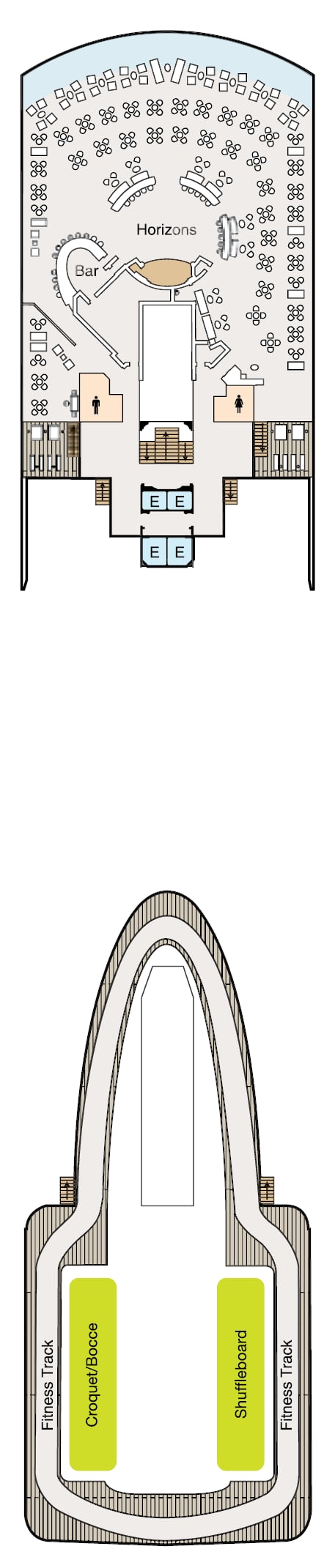
Marina blends sophistication with a contemporary flair to create a casually elegant ambiance. From the sparkling Lalique Grand Staircase to the stunning Owner's Suites furnished in Ralph Lauren Home, designer touches are everywhere, highlighting the finest residential design and furnishings. More than anything, Marina personifies the Oceania Cruises experience.
We count visits anonymously without cookies. Accept cookies to let us remember you across visits and connect activity if you create an account, or decline and we'll still count you anonymously. Read our privacy policy
ESC
The Captain
I'm the Captain. Tell me what you're after — "Caribbean under $2,000" or "7 nights from Miami" — and I'll find the sailing and its price history.