7-night Mediterranean cruise: Athens (Piraeus), Greece to Barcelona on Costa Pacifica
The Greece, Tunisia, Italy, Spain is a 7-night Mediterranean cruise aboard Costa Pacifica, operated by Costa Cruises. Departing Athens (Piraeus), Greece on November 5, 2027 and arriving in Barcelona on November 12, 2027, the voyage visits 6 ports including Souda Bay, La Goulette, Palermo. Fares start from $781 per person.
Fixed editorial images from the places on this itinerary. They stay stable each time you return to this sailing.
Athens (Piraeus), Greece
A city of legend, civilisation and enduring culture, Athens is a majestic and magical urban sprawl. Extraordinary elegance and grace combine with grit and graft in Greece's capital, where highways encase ruins from antiquity, and gleaming museums and galleries stand beside concrete sprayed with edgy street art. These contrasts enhance and elevate the wonders of this 2,500-year-old city, however, which can count notable contributions to philosophy, drama and democracy, among its global legacy. Piraeus' giant port and naval base welcome you to the edge of the Athens' urban area.
From there it's a simple jaunt to the centre. The majestic ancient citadel of the Acropolis dominates an elevated platform and is a constant presence as you explore the city. The wonderful remains of the columned temple of the Parthenon - which date back to the 5th century BC - stand here, representing the pinnacle of classical architecture. The nearby Acropolis Museum adds context to your visit and frames the broad views from its giant glass windows. Or rise up Mount Lycabettus, to be rewarded with perhaps Athens' best panorama of the Acropolis sitting high over the city on its grand stage. See the marble horseshoe of the Old Olympic Stadium, where the first modern Olympics were held in 1896, for more of the city's enduring legacy. Elsewhere, golden beaches and temples stretch out along the coastline, should you wish to explore a little further afield. Coffee is an art form to the Greeks, and it's an unwritten rule that coffee time must never be rushed. So prepare to settle down for a couple of hours and lose yourself in a good chat. Feeling hungry - try traditional souvlaki made with sauces handed from generation to generation.
La Goulette
From mosaics and ruins to souks and sights, La Goulette provides a fascinating insight into the Tunisian way of life.
Reaching the tip of Africa gives you the chance to explore some of the delights of exotic Tunisia. Dominating the fine avenues and lush foliage of La Goulette is the Great Mosque while in the suburbs lie the ruins of the once powerful ancient city of Carthage. Originally founded in 814BC by the Phoenicians, Carthage rose to real pre-eminence under Roman rule and grew to become one of the empire's largest cities, second only in size to Rome itself. Explore the remnants of this once great metropolis - ruins of villas, bathhouses, sanctuaries and theatres offer a fascinating insight into the past. Back in La Goulette, don't forget to haggle for souvenirs in the bustling souk markets where stalls are laden with copperware, rugs and aromatic spices.
Palermo
The capital of Sicily is situated on a crescent-shaped bay on the island's north coast. Once the intellectual capital of southern Europe, Palermo has always been at the crossroads of civilization. Due to its favourable location, Sicily's most interesting city has attracted almost every people and culture touching the Mediterranean world. Its most unique characteristic is a harmonious blend of Arab-Norman cultures mixed with Byzantine and Jewish elements, which created some unforgettable and resplendent works of art.
Phoenician traders first colonized Palermo in the 6th-century BC, but it was the Carthaginians, who built the important fortress here that caught the covetous eye of the Romans. After the first Punic War, the Romans took control of the city in the 3rd-century BC. Following several invasions by the Vandals, Sicily was settled by Arabs, who made the country an emirate and Palermo a showpiece capital that rivalled in splendour both Cordoba and Cairo. The city became a magical place of palaces and mosques, minarets and palm trees. In the 11th-century Palermo was conquered by the Norman ruler, Roger de Hauteville. During the Normans' hundred-year occupation, the city experienced a remarkable period of enlightenment and a flourishing of the arts. Counting a population of more than 300,000, Palermo became the centre of Norman rule and one of the most important trading centres between East and West.
Eventually, Palermo was incorporated into the “Kingdom of the Two Sicilies” under the Swabian ruler Frederick II, known as the Holy Roman Emperor. After the bloody Sicilian Vespers uprising in 1282, the Spanish took control and brought the Inquisition to Palermo. Some historians believe that the nature of the Inquisition helped foster the protective secret societies that eventually evolved into the Mafia.
Today, visitors can still experience the legacy of Palermo's rich past. Great Arab-Norman buildings include the Cappella Palatina, La Martorana, San Giovanni degli Eremiti and, a few miles outside the city, the Cathedral of Monreale. Palermo's bustling streets and animated markets give the town an Oriental feel. The Quattro Canti, or Four Corners, is the monumental crossroads laid out in 1608-1620 at the central intersection of the four longest and straightest streets of the city. North of Piazza Castelnuovo lie the avenues of the new city. Most sights are scattered along three major streets: Corso Vittorio Emanuele, Via Maqueda and Via Roma.
A vigorous metropolis with a strong historical profile, Palermo is packed with interesting sights, which make it an enriching and enjoyable place to explore.
Prices come from third-party data feeds via Costa Cruises and may differ from the cruise line's current fare. Confirm the final price before booking. How our pricing works
Lowest fares with no residency, age, or service requirement — verify eligibility at booking. How our pricing works
Not ready to book?
Get price alerts
We’ll email you when fares drop or return.
Check your email to finish
We sent a confirmation link to your inbox. Your alert is not on yet — click that link to switch it on.
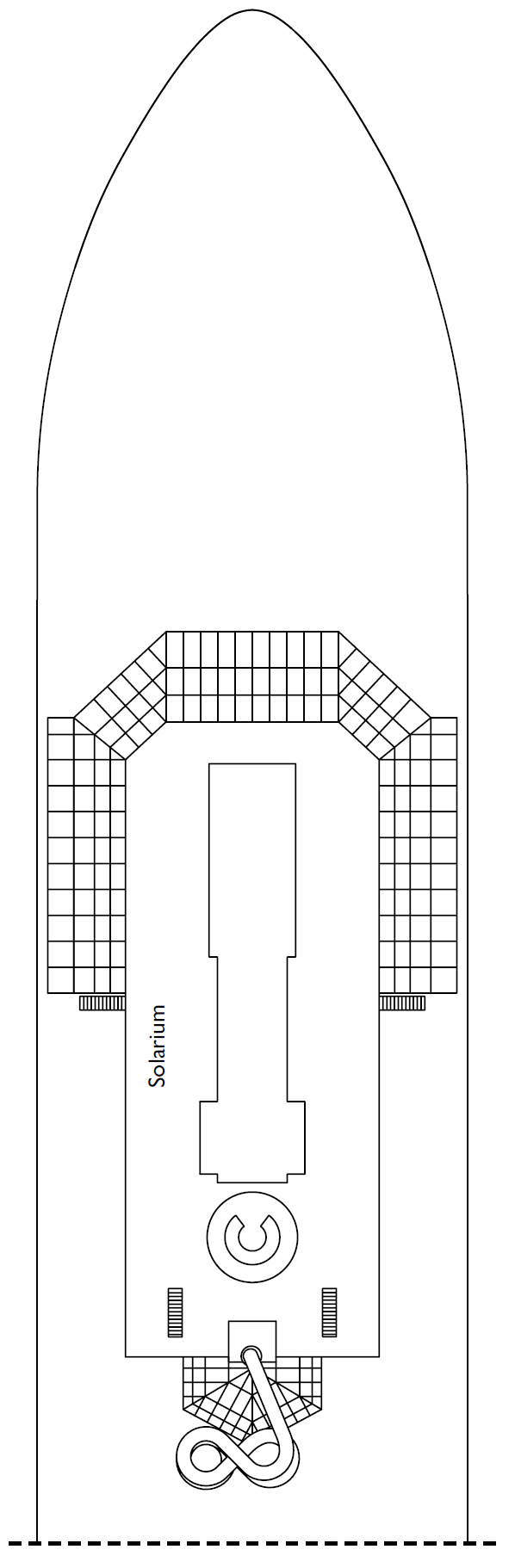
The Costa Pacifica is already a ship from the Guinness Book of Records because it was christened in Genoa on the same day as the Costa Luminosa. Its motto is "the sea in music": the styling and the deck names are all related to the world of music.
A stave of emotions on board amongst composers, operas and musical instruments that decorate each room. Costa Pacifica’s interior design is the work of an innovative artist in a harmonious blend of different styles. Music is played throughout the ship during the day. Particular care was taken to provide flawless sound quality aboard, and the maestro Mauro Pagani has also written thirty pieces of music exclusively for this cruise ship. When you're tired of the music, visit the external decks to listen to the melody created by the lapping of the water. Now take a look at the current position of Costa Pacifica.
We count visits anonymously without cookies. Accept cookies to let us remember you across visits and connect activity if you create an account, or decline and we'll still count you anonymously. Read our privacy policy
ESC
The Captain
I'm the Captain. Tell me what you're after — "Caribbean under $2,000" or "7 nights from Miami" — and I'll find the sailing and its price history.