7-night Western Mediterranean cruise from St. Tropez, France on Costa Pacifica
The France, Balearic Islands, Spain, Italy is a 7-night Western Mediterranean cruise aboard Costa Pacifica, operated by Costa Cruises. Departing St. Tropez, France on September 7, 2026, the voyage visits 6 ports including Palma de Mallorca, Valencia, Olbia/Sardinia. Fares start from $1,060 per person.
Fixed editorial images from the places on this itinerary. They stay stable each time you return to this sailing.
St. Tropez, France
A glitzy, glamorous coastal resort that needs no introduction, Saint Tropez is the French Riviera hotspot of choice for A-listers and flotillas of gleaming yachts. The sparkle of its beaches, and clarity of its light, continues to attract artists - but it was the famous presence of Brigitte Bardot that leant Saint Tropez its enduring glamour and steamy appeal. Nowadays, speedboats skim offshore, while fine vintages from the vineyards nearby are uncorked in top-notch restaurants, in this well-heeled highlight of the Cote d'Azur. View less
Famous bars offer views of the port along Quai Jean Jaurès, with its iconic cherry-red directors' chairs. Here you can admire the monstrous wealth of yachts that sparkle on the waters. On the same corner, big-name brand labels glimmer in the shops of rue François Sibilli - which cuts inland from the charming waterfront. The earthier appeal of boules clinking and thumping into the ground can be enjoyed at Place des Lices, where sun-wrinkled locals compete. Saint Tropez has a few beaches of its own, but famous stretches like Pampelonne Beach draw the biggest crowds to relax on star-studded golden sands. La Ponche, the authentic fishing quarter, retains its cobbled, historic elegance, and a 17th-century, hexagon-shaped citadel watches over the city and coastline from above. Coastal walks in the sea air snake away from the city’s bustle, and a series of headlands shape the stunning riviera landscape surrounding Saint Tropez. The historic monochrome Cap Camarat lighthouse adds a pleasing accent to hikes above the sparkling Mediterranean’s waves.
Palma de Mallorca
The Balearics are comprised of 16 islands; the three principal ones are Mallorca, Ibiza and Minorca. Carthaginians, Romans, Vandals and Arabs have invaded these islands over the centuries. Ruins show evidence of the prehistoric Talayot civilization, a megalithic culture that flourished here between 1500 BC and the Roman conquest. Today the islands are besieged by invaders of a different sort - hordes of tourists.
Lying 60 miles (97 km) off the Spanish mainland, the islands' lush and rugged landscape combined with an extremely mild, sunny climate proves irresistible, especially to northern Europeans. As a result, the Balearics boast cosmopolitan resorts with lively nightlife and plenty of sports activities.
Mallorca (also spelled Majorca) is the largest of the islands, with an area of more than 1,400 square miles (3626 sq.km). The scenery is magnificent, with cliffs along indented shorelines jutting out of the sea and mountain ranges sheltering the plains from harsh sea breezes. The fertile plain in the centre is covered with almond and fig trees plus olive groves with some trees more than 1,000 years old. Tall pines, junipers and oaks line the mountain slopes.
Palma de Mallorca is the capital of the archipelago. A cosmopolitan city with sophisticated shops and restaurants, it also offers buildings of spectacular Moorish and Gothic architecture.
In the western part of Mallorca, nestled into the mountains, lies the village of Valldemosa. It is known for its Carthusian Monastery where Frédéric Chopin and George Sand spent the winter of 1838-39.
Valencia
Valencia is Spain's third largest city and capital of the region. It was originally founded by the Romans on the banks of the river Turia in 138 BC. In 711 AD the Moors arrived and converted the area into a rich agricultural and industrial center, establishing ceramics, paper, silk and leather industries. Muslim rule was briefly interrupted in 1094 by the legendary Castillian knight, El Cid. Valencia boomed in the 15th and 16th centuries, becoming one of the strongest Mediterranean trading centers.
Valencia is a vibrant, friendly and chaotic city that boasts an outstanding fine arts museum and one of the most exciting nightlife scenes in Spain. The city center is about 3 miles inland from the coast. Plaza del Ayuntamiento marks the center of Valencia. Surrounded by flower stalls, it is also home to the town hall and the main post office. The cathedral was begun in the 13th century and finished in 1482. It has many architectural styles, including Gothic, Baroque and Romanesque. The octagonal bell-tower, called Miguelete, is one of the city's landmarks. The small cathedral museum boasts a tabernacle made from 550 pounds of gold, silver, platinum, emeralds and sapphires. It also purports to be the home of the Holy Grail, the cup used by Christ at the Last Supper.
West of the cathedral is the oldest part of the city, known as El Carme. Situated across the river in the Jardines del Real is the Museo de Bellas Artes, the Fine Arts Museum. Works include those by El Greco, Goya and Velázquez.
Prices come from third-party data feeds via Costa Cruises and may differ from the cruise line's current fare. Confirm the final price before booking. How our pricing works
Lowest fares with no residency, age, or service requirement — verify eligibility at booking. How our pricing works
Not ready to book?
Get price alerts
We’ll email you when fares drop or return.
Check your email to finish
We sent a confirmation link to your inbox. Your alert is not on yet — click that link to switch it on.
Follow the entire sailing from its first day to its last, with the route and schedule in one view.
Day 1·Sep 7, 2026
St. Tropez, France
A glitzy, glamorous coastal resort that needs no introduction, Saint Tropez is the French Riviera hotspot of choice for A-listers and flotillas of gleaming yachts.
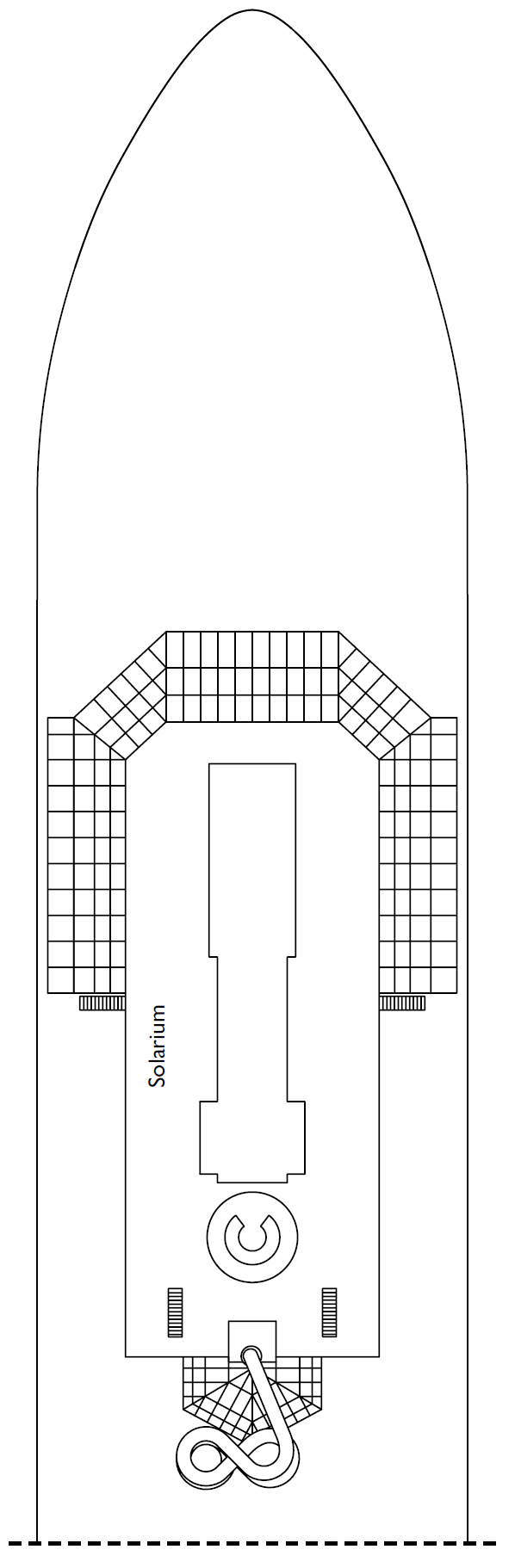
The Costa Pacifica is already a ship from the Guinness Book of Records because it was christened in Genoa on the same day as the Costa Luminosa. Its motto is "the sea in music": the styling and the deck names are all related to the world of music.
A stave of emotions on board amongst composers, operas and musical instruments that decorate each room. Costa Pacifica’s interior design is the work of an innovative artist in a harmonious blend of different styles. Music is played throughout the ship during the day. Particular care was taken to provide flawless sound quality aboard, and the maestro Mauro Pagani has also written thirty pieces of music exclusively for this cruise ship. When you're tired of the music, visit the external decks to listen to the melody created by the lapping of the water. Now take a look at the current position of Costa Pacifica.
We count visits anonymously without cookies. Accept cookies to let us remember you across visits and connect activity if you create an account, or decline and we'll still count you anonymously. Read our privacy policy
ESC
The Captain
I'm the Captain. Tell me what you're after — "Caribbean under $2,000" or "7 nights from Miami" — and I'll find the sailing and its price history.