10-night Mediterranean cruise from Malaga on MSC Opera
The 10 nights Western Mediterranean from Malaga (Granada) is a 10-night Mediterranean cruise aboard MSC Opera, operated by MSC Cruises. Departing Malaga on August 24, 2026, the voyage visits 8 ports including Cadiz, Lisbon, Alicante. CruiseCaptain has fare history for this sailing.
Fixed editorial images from the places on this itinerary. They stay stable each time you return to this sailing.
Malaga
The elegant central zone of Málaga – a stop-off on your MSC cruise of the Mediterranean – is largely pedestrianized with the focal point, marble-paved Calle Marqués de Larios, lined with fashionable stores, its most elegant thoroughfare.
Plaza de la Constitución, Málaga’s main square, hosts a monumental fountain flanked by slender palms and the terraces of numerous cafés and restaurants. Málaga centre has a number of interesting churches and museums, not to mention the birthplace of Picasso and the Museo Picasso Málaga, housing an important collection of works by Málaga’s most famous son.
Perched on the hill above the town are the formidable citadels of the Alcazaba and Gibralfaro, magnificent vestiges of the seven centuries that the Moors held sway here.
Málaga is also renowned for its fish and seafood, which can be sampled at tapas bars and restaurants throughout the city, as well as at the old fishing villages of El Palo and Pedregalejo, now absorbed into the suburbs, where there’s a seafront paseo lined with some of the best marisquerías and chiringuitos (beachside fish restaurants) in the province.
The impressive Alcazaba is the place to make for if you’re joining a shore excursion. Clearly visible from your cruise ship, to the left of its entrance on c/Acazabilla stands the Roman Theatre accidentally discovered in 1951, and – following excavation and restoration – now a venue for various outdoor entertainments.
The citadel, too, is Roman in origin, with blocks and columns of marble interspersed among the Moorish brick of the double- and triple-arched gateways. Above the Alcazaba, and connected to it by a long double wall (the coracha), is the Gibralfaro castle. Like the Alcazaba, it has been wonderfully restored and now houses an interesting museum devoted to its history.
Cadiz
More than a hundred watchtowers gaze out across the waves surrounding this ancient Andalusian city. Sprinkled with evocative cobbled side streets, you’ll explore 3,000 years’ worth of history, while stumbling across palm-tree lined plazas of shaded coffee sippers. Cadiz claims the mantle of Western Europe’s oldest city, and every piece of architecture - and every wrong turn - offers a chance to discover fascinating new tales. Founded by the Phoenicians in 1100BC, Christopher Columbus used the city as a base for his exploratory, map-defining voyages of 1493 and 1502.
The port grew in importance and wealth as Cadiz’s strategic location close to Africa’s northern tip helped it blossom into a centre for New World trade. Catedral de Cádiz, is a display of the city’s wealth and importance, looming spectacularly over the Atlantic’s waves, with cawing seagulls sweeping between its twin bell towers. Inside, treasures from the city’s trading exploits in the West Indies and beyond - which helped fuel the growth of this historically prosperous city – are on display. Enveloped by ocean on almost every side, Cadiz has something of an island feel, and you can cool off from southern Spain’s unrelenting sunshine on the sweeping golden sand beach of Playa Victoria. The two towers of the new El Puente de la Constitución de 1812 mark a contemporary landmark in this most ancient of cities, in the form of a spectacular new road bridge. Torre Tavira, meanwhile, is the most famous of Cadiz’s army of watchtowers, and the highest point in the city. Reach the top for a view of the ocean fringing the city’s expanse, and to learn about the towers - constructed so trading merchants could survey the harbour from their lavish homes. The Central Market is a chaotic place of bartering, where flashing knives dissect fresh fish. Stop in at the orbiting bars to enjoy tapas, freshly prepared with the market’s produce.
Lisbon
Lisbon, the capital of Portugal, is a city open to the sea and carefully planned with 18th-century elegance. Its founder is said to be the legendary Ulysses, but the theory of an original Phoenician settlement is probably more realistic. Known in Portugal as Lisboa, the city was inhabited by the Romans, Visigoths and, beginning in the 8th century, the Moors. Much of the 16th century was a period of great prosperity and overseas expansion for Portugal. Tragedy struck on All Saints' Day in 1755 with a devastating earthquake that killed about 40,000 people. The destruction of Lisbon shocked the continent. As a result, the Baixa (lower city) emerged in a single phase of building, carried out in less than a decade by the royal minister, the Marques de Pombal. His carefully planned layout of a perfect neo-classical grid survived to this day and remains the heart of the city. Evidence of pre-quake Lisbon can still be seen in the Belém suburb and the old Moorish section of the Alfama that sprawls below the Castle of St. George.
Lisbon is a compact city on the banks of the Tagus River. Visitors find it easy to get around as many places of interest are in the vicinity of the central downtown area. There is a convenient bus and tram system and taxis are plentiful. Rossio Square, the heart of Lisbon since medieval times, is an ideal place to start exploring. After a fire destroyed parts of the historic neighborhood behind Rossio in 1988, many of the restored buildings emerged with modern interiors behind the original façades.
The city boasts a good many monuments and museums, such as the Jeronimos Monastery, Tower of Belém, the Royal Coach Museum and the Gulbenkian Museum. High above the Baixa is the Bairro Alto (upper city) with its teeming nightlife. The easiest way to connect between the two areas is via the public elevator designed by Gustave Eiffel.
Cruising up the Tagus River to the ship's berth, you can already spot three of Lisbon's famous landmarks: the Monument to the Discoveries, the Tower of Belém and the Statue of Christ, which welcomes visitors from its hilltop location high above Europe's longest suspension bridge.
Follow the entire sailing from its first day to its last, with the route and schedule in one view.
Day 1·Aug 24, 2026
Malaga
The elegant central zone of Málaga – a stop-off on your MSC cruise of the Mediterranean – is largely pedestrianized with the focal point, marble-paved Calle Marqués de Larios,…
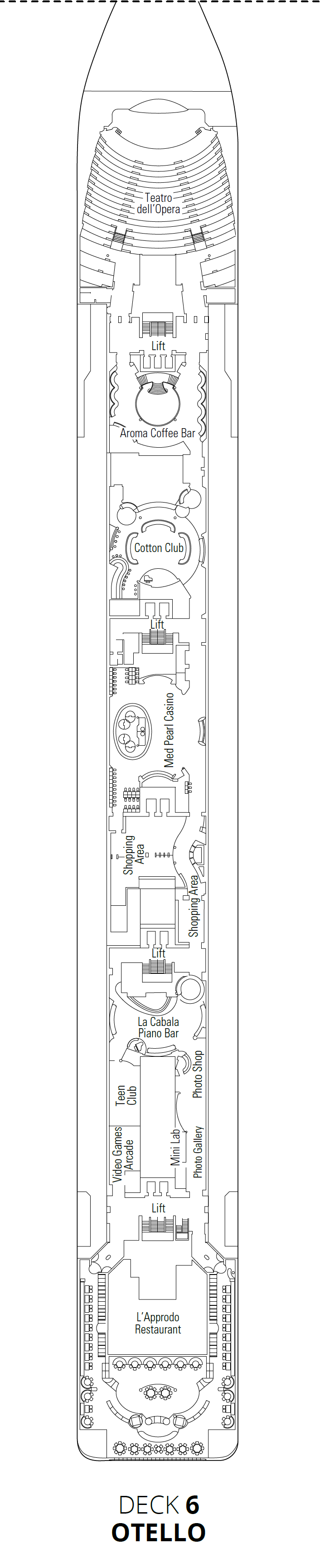
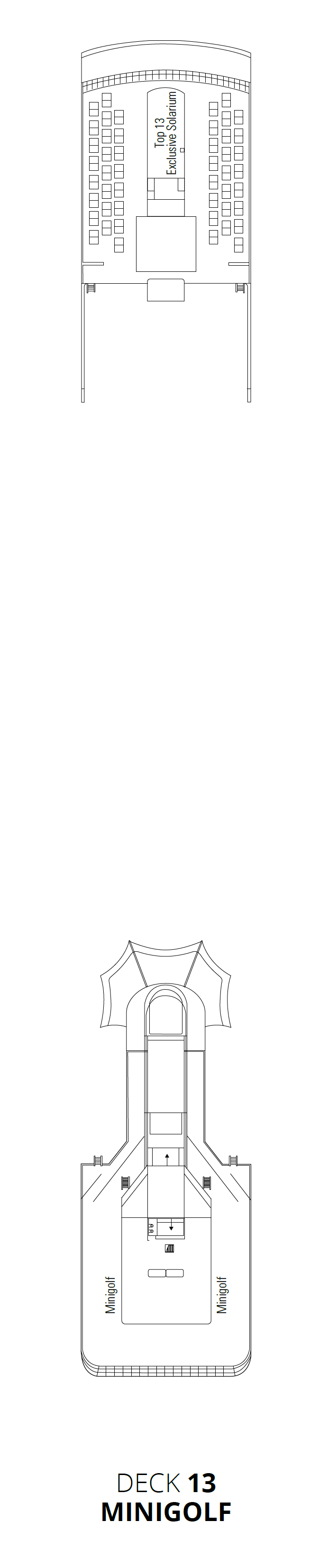
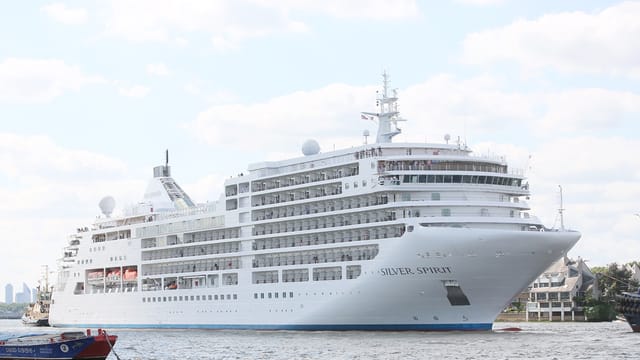
With its impressive array of new features and facilities, MSC Opera is now even better equipped to satisfy the needs of our guests.
We’ve added spacious new cabins with balconies offering superb panoramic views and we have enlarged the restaurant and buffet areas to serve up an even greater variety of culinary treats. There is even a new 330 m² music and dance area for guests to show off their moves.
We count visits anonymously without cookies. Accept cookies to let us remember you across visits and connect activity if you create an account, or decline and we'll still count you anonymously. Read our privacy policy
ESC
The Captain
I'm the Captain. Tell me what you're after — "Caribbean under $2,000" or "7 nights from Miami" — and I'll find the sailing and its price history.