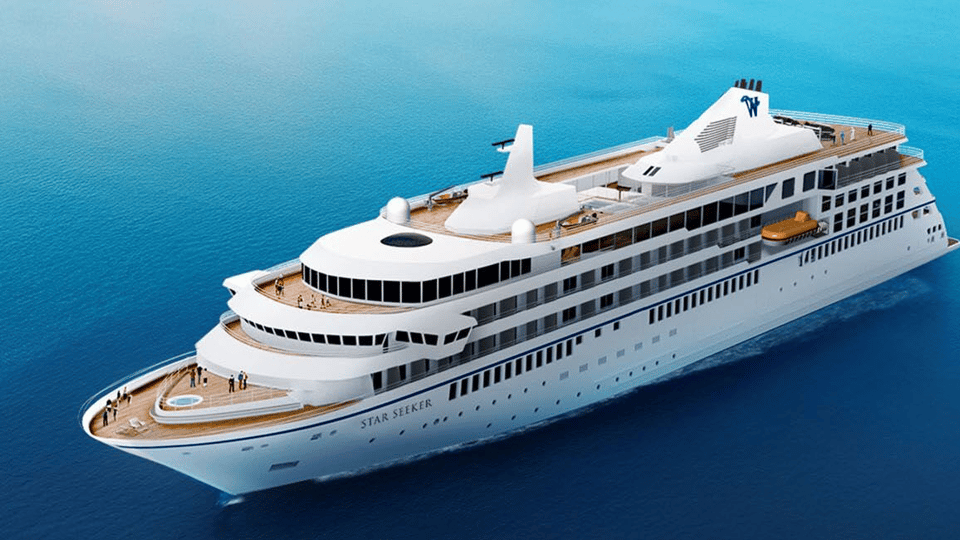
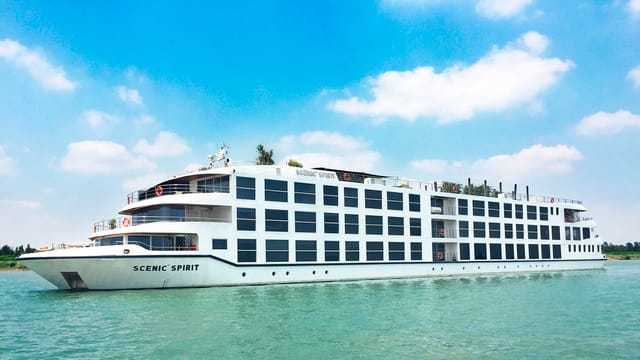
21-night Asia & Indian Ocean cruise: Sapporo (Muroran/Hokkaido) to Tokyo (Yokohama), Japan on Star Seeker
The Sapporo (Otaru), Hokkaido, Japan to Tokyo is a 21-night Asia & Indian Ocean cruise aboard Star Seeker, operated by Windstar Cruises. Departing Sapporo (Muroran/Hokkaido) on September 14, 2027 and arriving in Tokyo (Yokohama), Japan on October 5, 2027, the voyage visits 11 ports including Osaka, Takamatsu, Tomonoura Port, Japan. Fares start from $12,336 per person.
The capital of Hokkaido, Sapporo is a gateway to Japan's northern island of rugged mountains, hot springs and endless winter adventures. Cruise through Odori Park, an oasis that hosts the world-famous Snow Festival in winter, a lilac festival in spring and a beer festival in summer. Learn about Hokkaido's frontier history at Former Hokkaido Government Office, an exquisite example of American neo-Baroque architecture dating back to 1888. Cruise to Sapporo to immerse yourself in Japanese culture, soak your bones in the steamy springs of Jozankei, and feast on Sapporo's famous hearty ramen noodle soup defined by salty miso, a fermented soya bean paste.
Osaka
The third largest city in Japan, Osaka was founded on the mouth of the Yamato and Yodo rivers, on the island of Honshu. On a MSC cruise you can discover this metropolis, once the trading capital of Japan.
Famous for its modernity and its nightlife, Osaka has a surprisingly rich historical and artistic heritage. With an excursion you may reach the ancient Castle. It was built from 1583 onwards on the former site of the Ishiyama Honganji temple, which had been commissioned by the samurai and daimyo, Hideyoshi, one of the great unifiers of Japan and destroyed thirteen years earlier by Oda Nobunaga. This imposing building, from the tower of which you can admire the splendid view of Osaka, is surrounded by a wonderful park of 6 hectares: an authentic poetic vision when the cherry blossoms bloom in Spring. Along the canal, near the Castle, you'll find the quarter of Dotonbori, an explosion of colourful signposts indicating night clubs, restaurants and izakayas, a sort of Japanese cafè.
Along the main road, the Ebisubashi bridge links the Shinsaibashi-suji and Ebisubashi-suji quarters, renowned for their shops.
If Dotonbori is the place to go for modernity, Shinsekai is the quarter that represents the old town of Osaka. Developed before the Second World War, it has been neglected over the years. In the centre of this urban area you may find the Tsutenkaku Tower. This landmark of Shinsekai bears some resemblance to the Parisian Eiffel Tower and was the focal point of the permanent fun fair set up around it.
On an excursion get a great view of the whole city from a height of 173 metres above sea level.
In fact, you can climb to the fortieth floor of the Umeda Sky Building, designed by the architect Hiroshi Hara. The skyscraper is made up of two identical towers, connected between them by several bridges and on the highest part, by the Floating Garden Observatory, the hanging gardens from which you may admire Osaka.
For those who enjoy shopping, you can walk along the Tenjinbashi Arcade. This indoor arcade extends for about two kilometres, from the underground station of Tenjimbashi-suji Rokuchome to the Tenjinbashi bridge: the shops sell all sorts, from shoes to books, from clothing to medicine.
Takamatsu
Takamatsu is located on Shikoku, the smallest of Japan’s four main islands, in the Kagawa Prefecture on the Seto Inland Sea. During the Edo period, it was famous for its seaside castle, one of the few with a moat utilizing seawater. The castle was destroyed during the Meiji period, and today the so-called Sunport waterfront project has substituted the Symbol Tower, Takamatsu’s tallest building, for the castle tower that once graced its flag. Long an important port for Japan, Takamatsu was nearly destroyed in 1945 by Allied incendiary bombing. A portion of the famous castle, including foundations and part of the wall, still strand on the city-center park, and there are plans to reconstruct more of it. The Ritsurin Koen garden, first built in the Edo period, survives, and makes a welcome oasis in the city, with a folk museum, rest houses and a tranquil tearoom among lakes, hills and groves of cherry trees that bloom in the spring and flame into color in the autumn. The Shikoku Mura is an open-air museum with traditional buildings gathered from all over Shikoku on display. The Yashima area boasts an Isamu Noguchi Museum dedicated to the late designer, artist and sculptor, with several traditional buildings he relocated and used as work spaces and galleries, along with many finished and unfinished sculptures. There is also a lovely Yashima Temple halfway up the mountain, and at the top, an observation deck with breathtaking views of the city and port.
We count visits anonymously without cookies. Accept cookies to let us remember you across visits and connect activity if you create an account, or decline and we'll still count you anonymously. Read our privacy policy
ESC
The Captain
I'm the Captain. Tell me what you're after — "Caribbean under $2,000" or "7 nights from Miami" — and I'll find the sailing and its price history.